[Intergenerational Space] 52間の縁側_ From Day Service to Mutual Care in the Community

Fieldwork to 52間の縁側 (52-Bay Engawa)
on 27 Aug 2026
Field Note
1. Who is here?
Older people and staff share the space with their children, local residents, people with disabilities.
2. What brings them here?
It operates as a day service for older adults, but everyday life extends beyond care by allowing local residents to gather in the space.
3. What actually happens?
People of different generations share everyday life—resting, eating, playing, talking, and helping one another. Relationships grow through everyday co-presence.
4. What enables these connections?
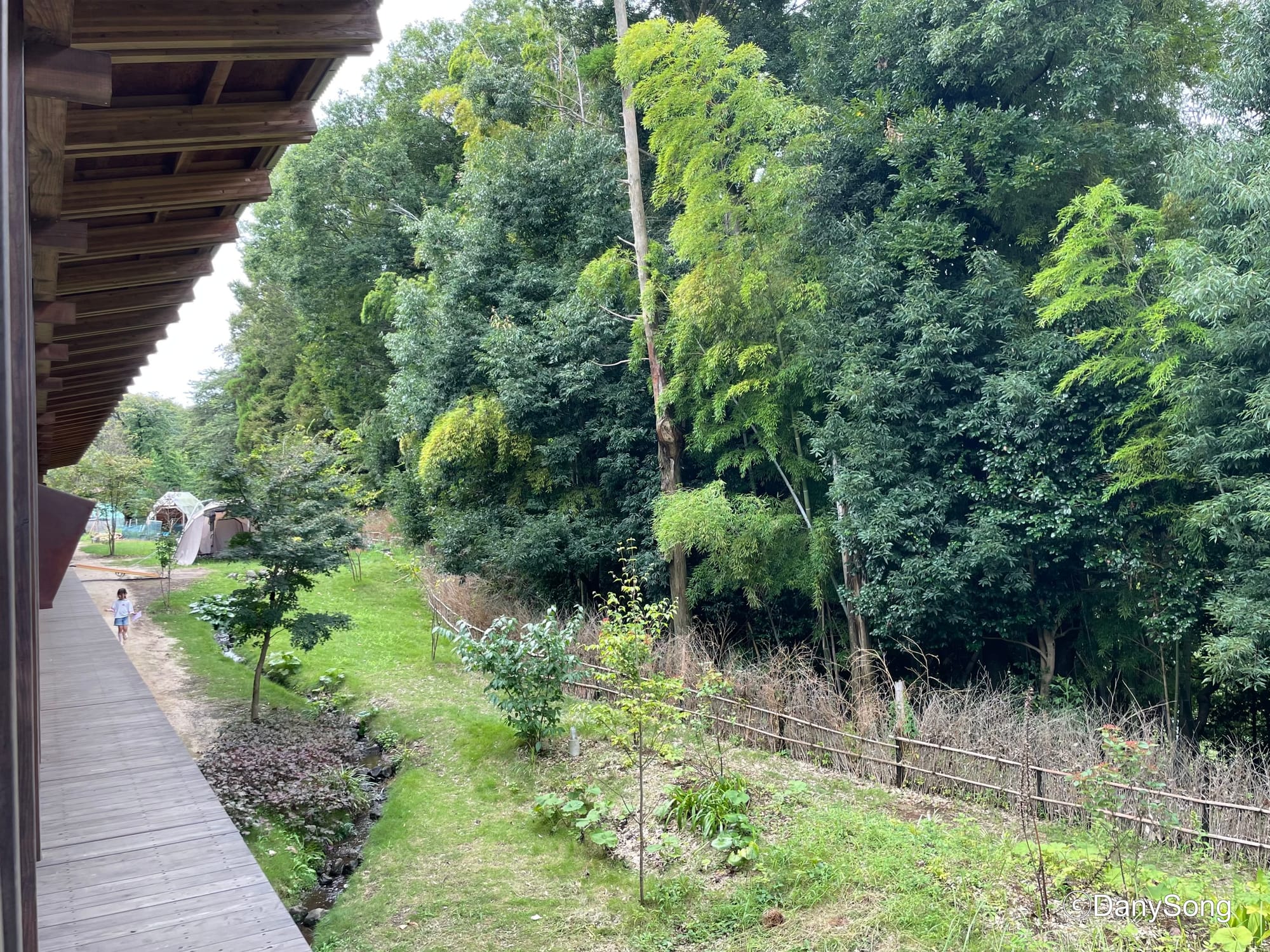
Spatially, the long, open engawa, garden, café, and other spaces that connect the inside and outside are important. In terms of management, staff can bring their children and pets, which leads to natural intergenerational gatherings. This openness also attracts local people through word of mouth and the networks of staff, as well as through the facility’s own outreach.
5. What can I learn?
Connection does not always require structured programmes. What impressed me most was the way staff could work there without leaving their own way of life behind. When work, care, family, and community life overlap, relationships can emerge naturally through everyday life, rather than being reduced to a simple economic exchange.
52-Ken Engawa is a care facility in Yachiyo, Chiba, Japan, and is part of the Ishii-san-chi (いしいさん家) network.
Care facilities in the Ishii-san-chi network are different from conventional institutional care settings. Older people, children, people with disabilities, and local residents naturally come and go, interact, and build relationships. Along the way, care is embedded in these everyday interactions. People who receive care are not just passive recipients but also influence others in a positive way and form relationships with them.
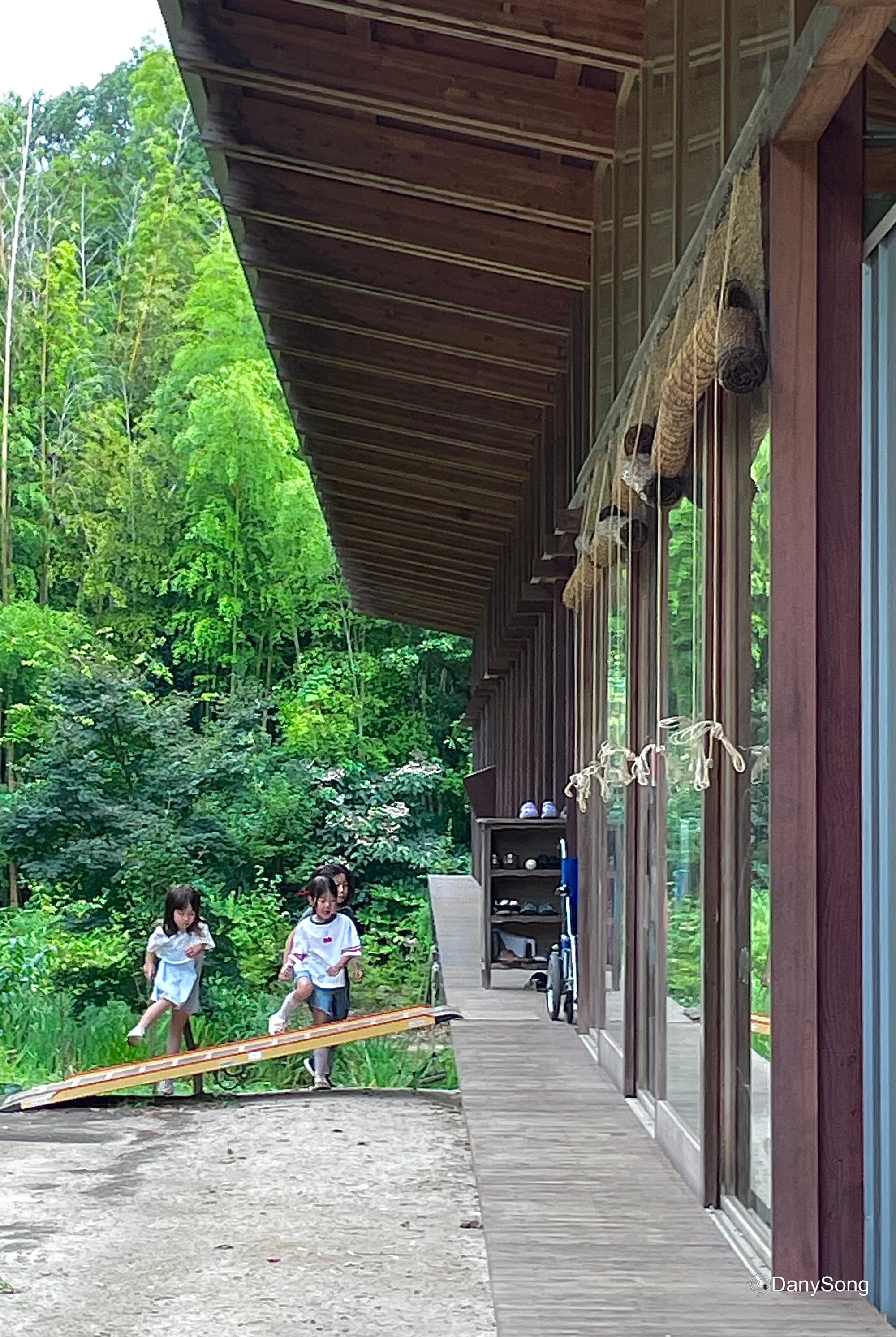
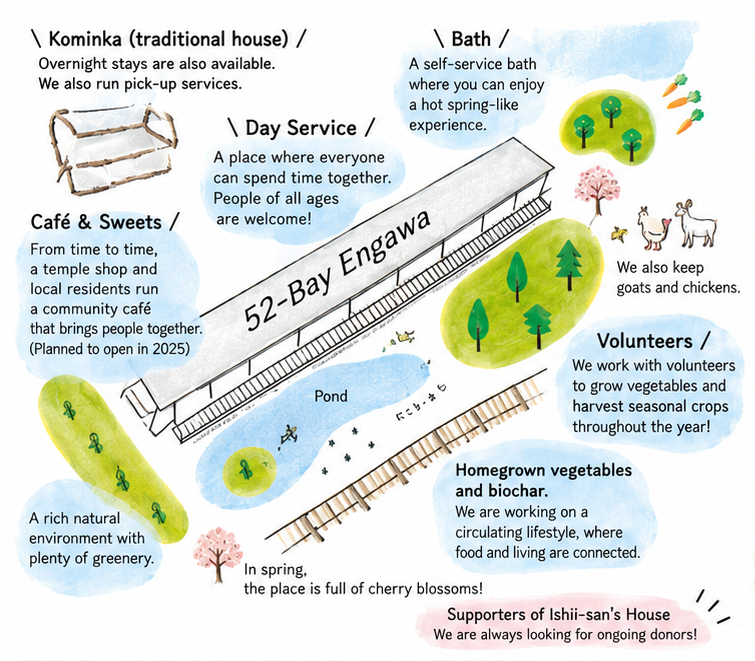
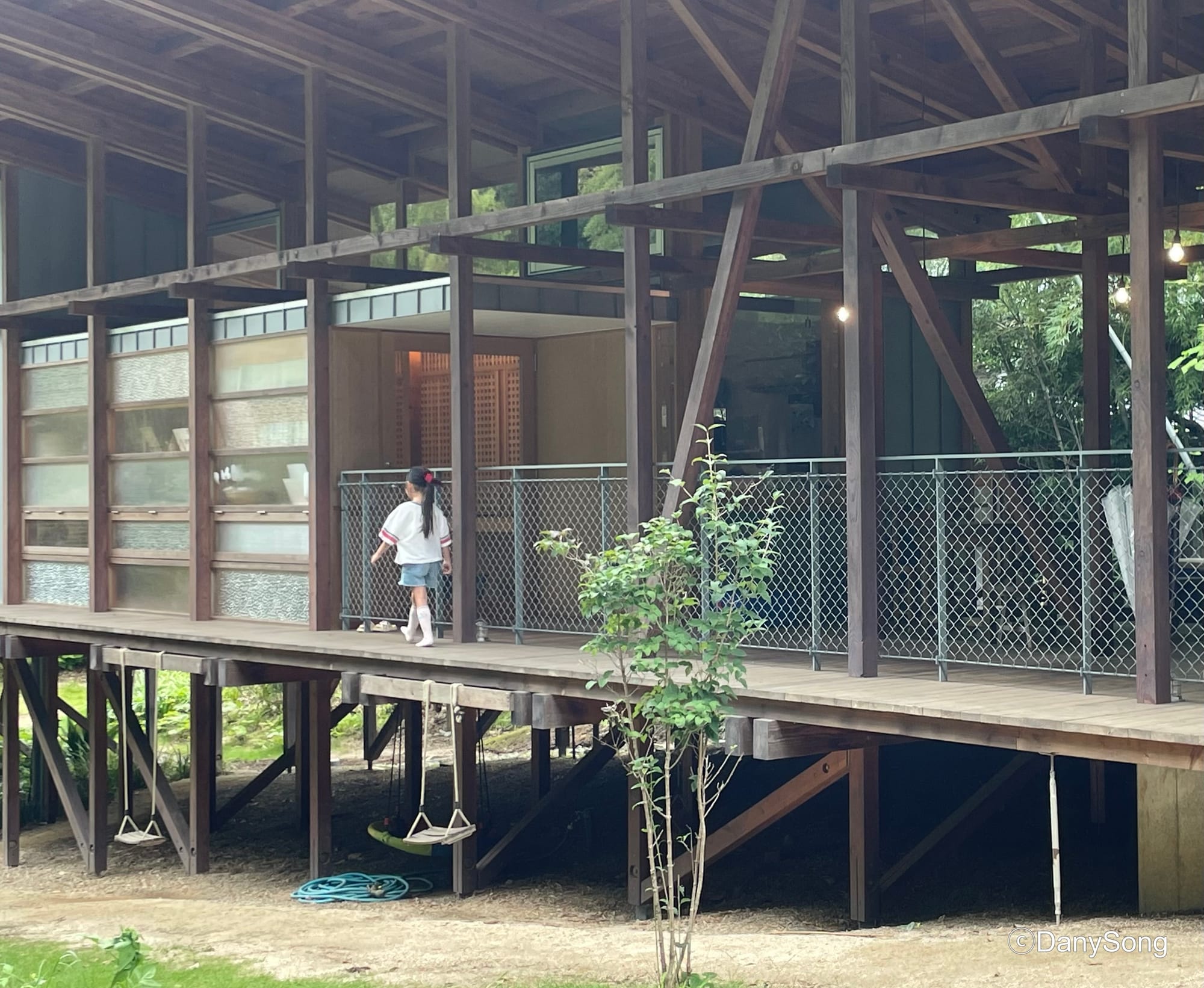
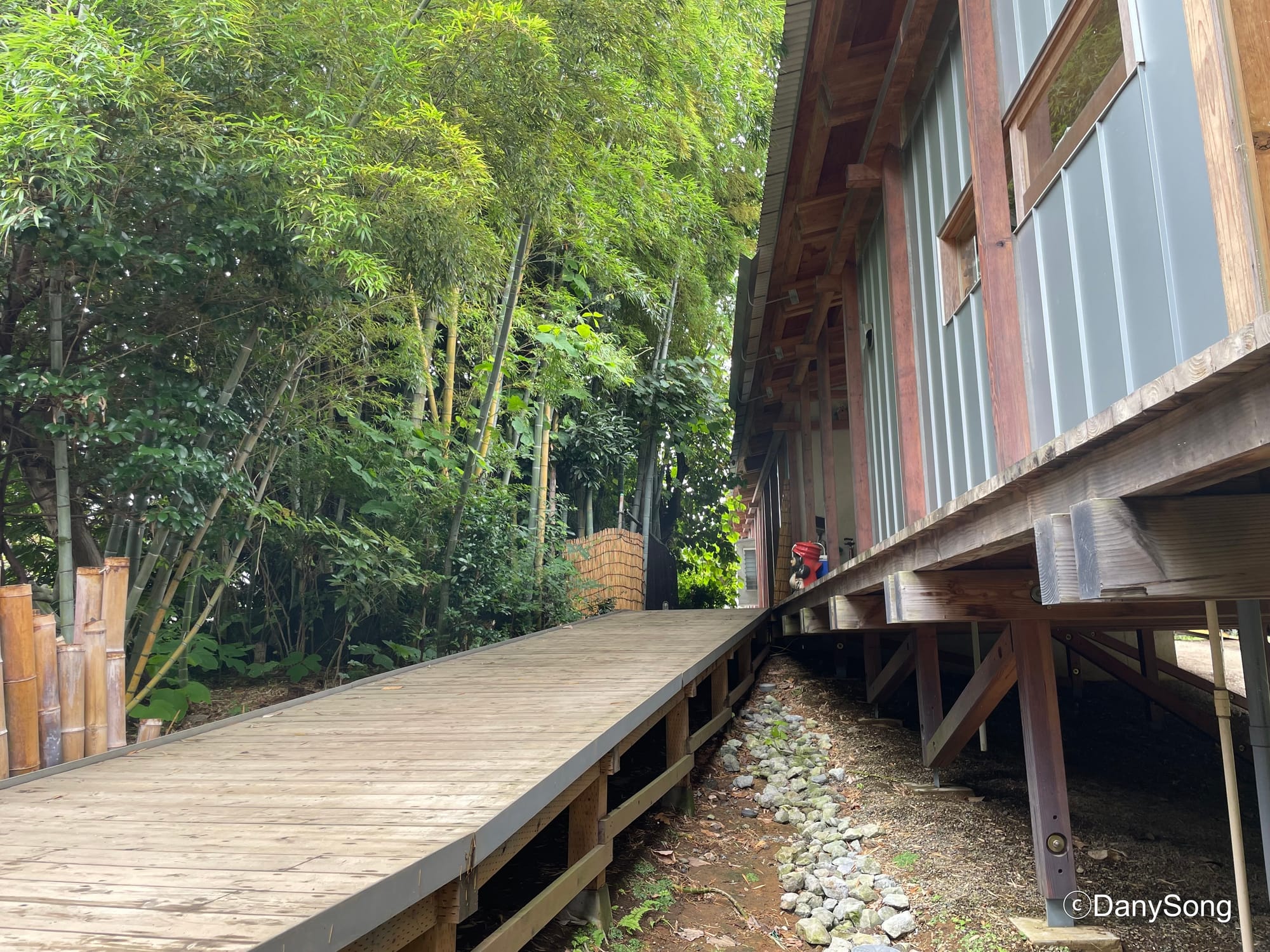
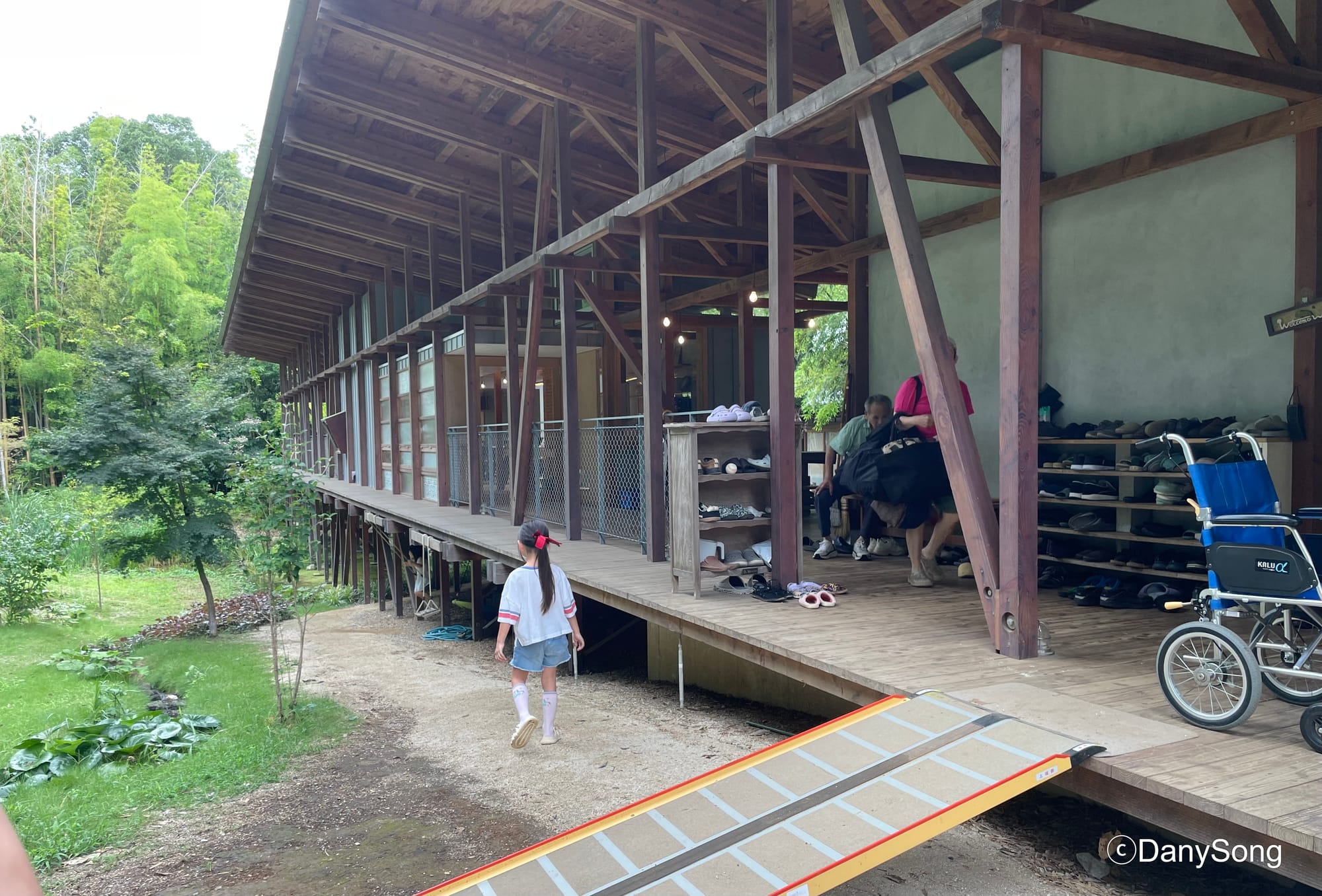
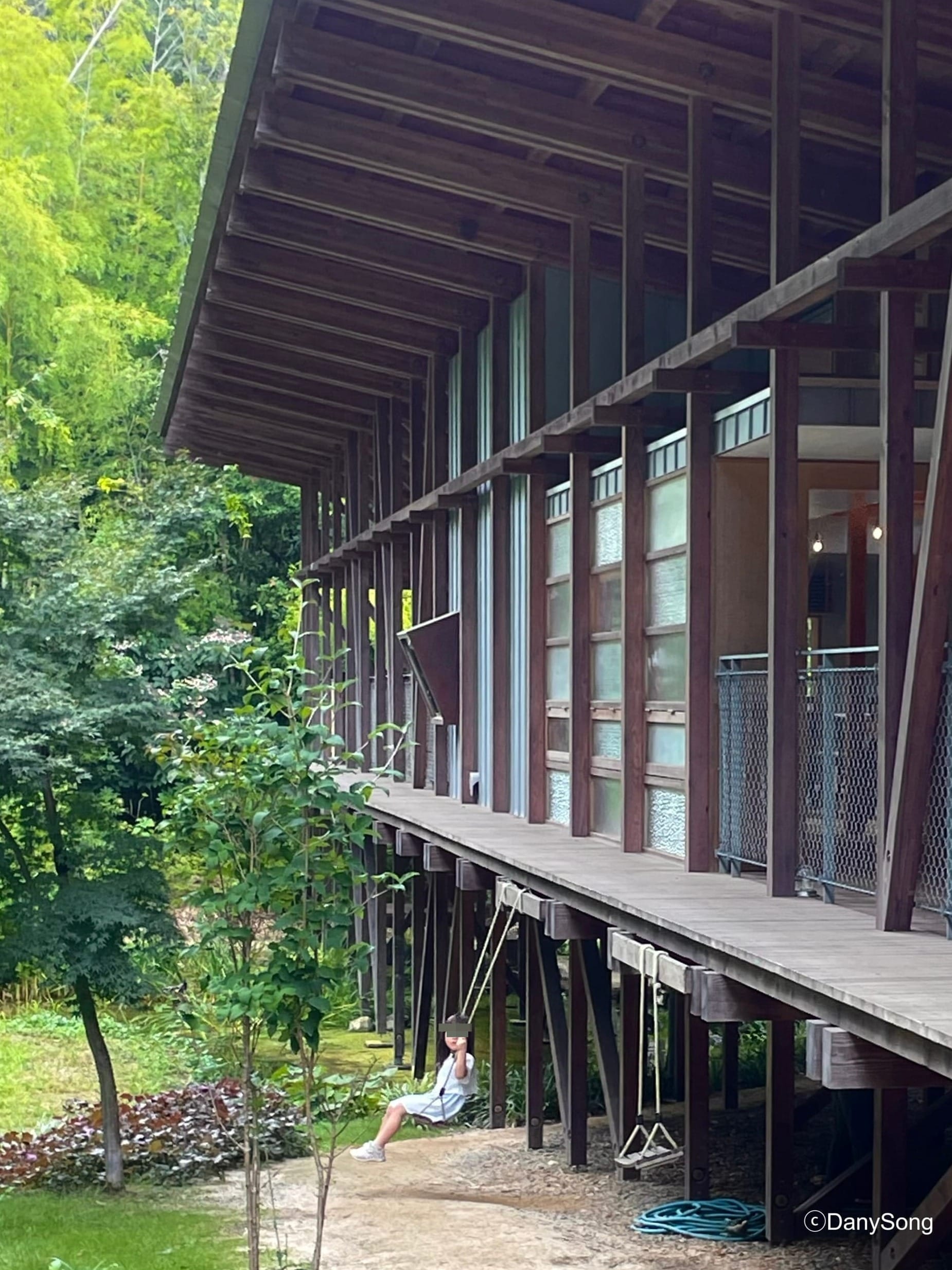
The name of this place refers to its long traditional Japanese veranda, made up of 52 bays. Walking along this linear veranda, you can see people inside gathering, resting, eating, and playing. At the same time, people inside can also see those walking along the engawa. Long corridors with blocked views can often feel closed but this engawa runs along the outdoor space, where children run back and forth, bringing vitality to the space.
What impressed me most about this place was,
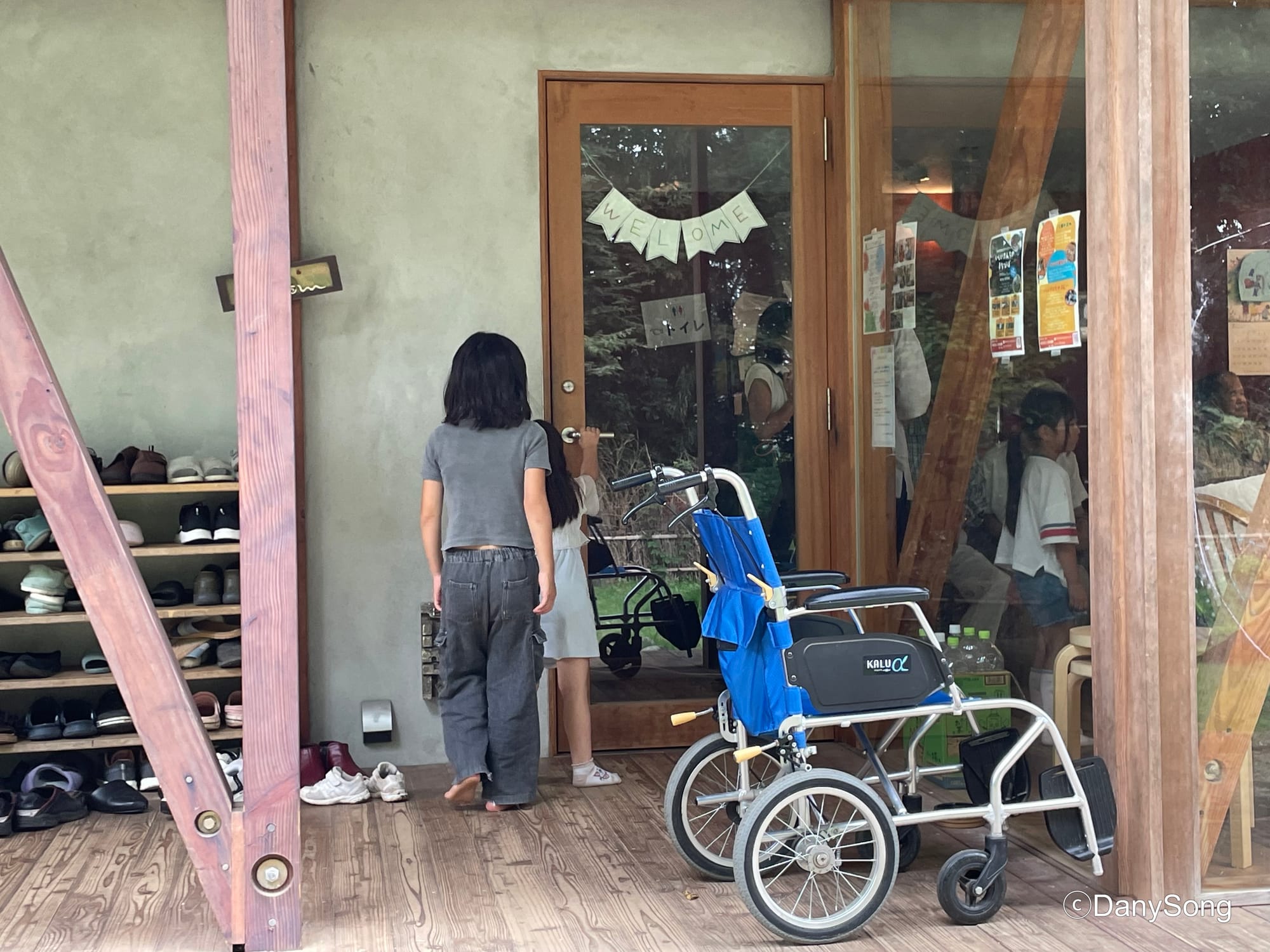
first, that there was no fixed daily schedule, which made the atmosphere feel more like a home than a care facility.
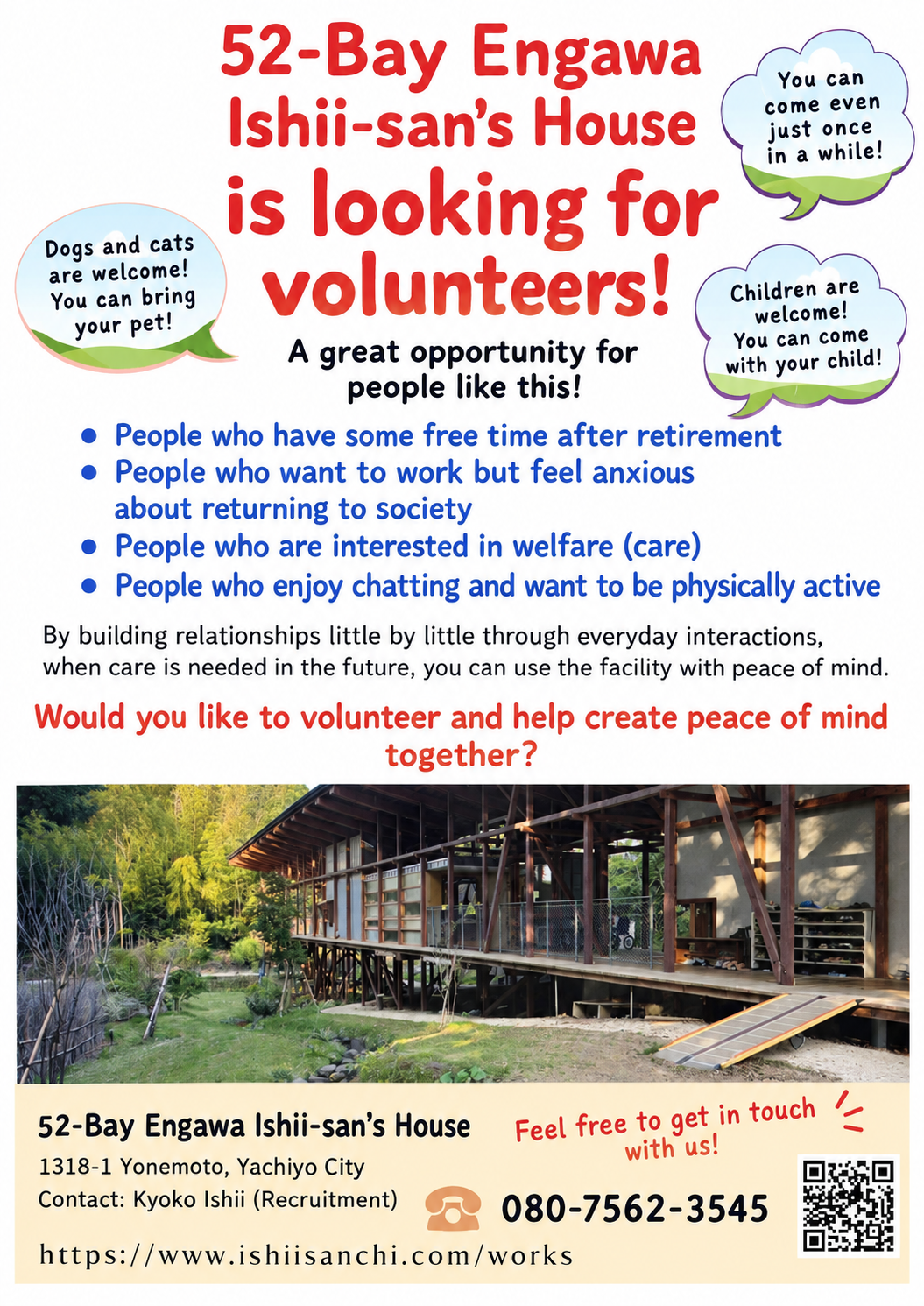
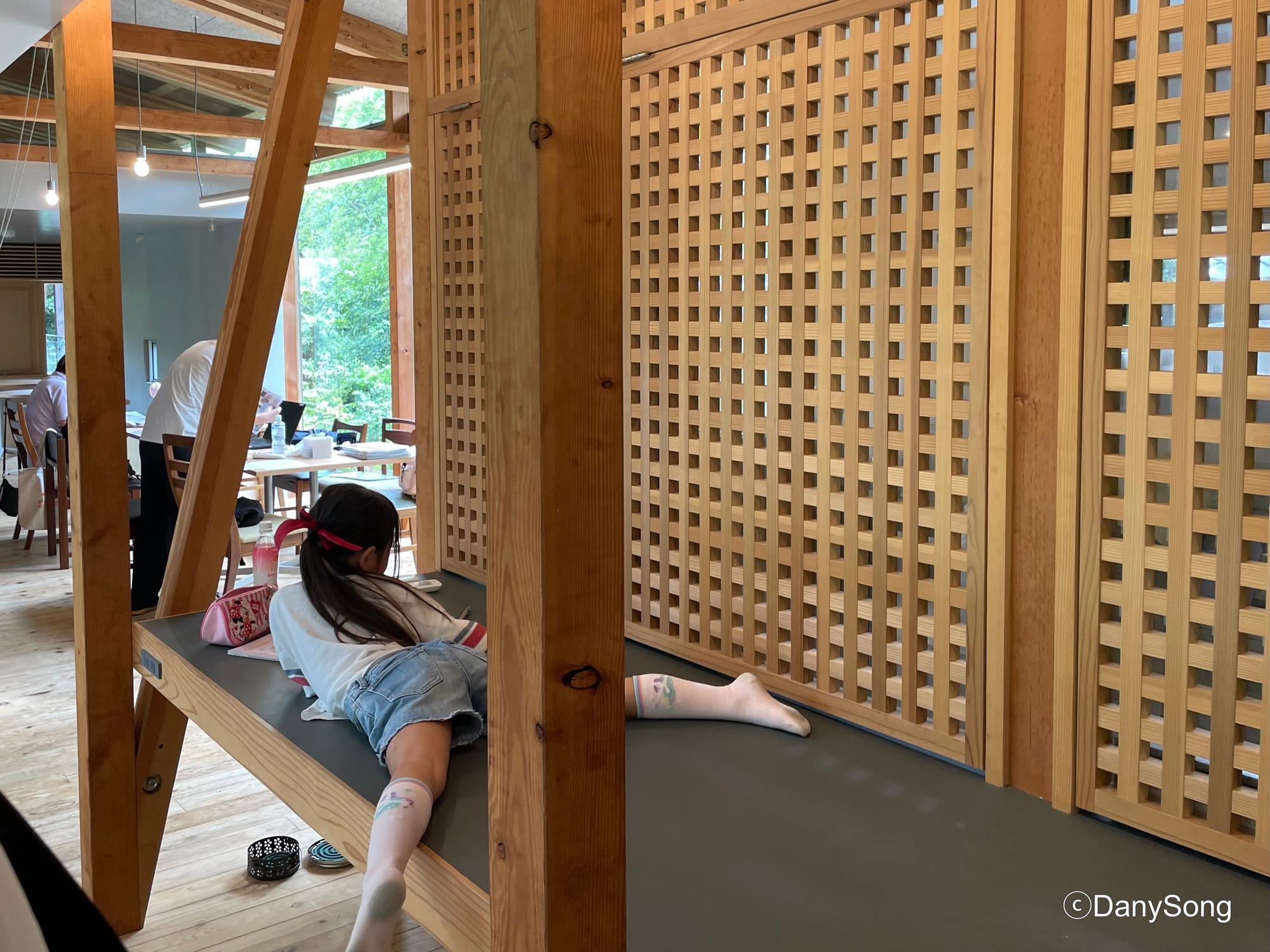
Second, staff can also bring their children and pets, allowing different generations to naturally share the same space. In fact, their staff recruitment flyer welcomes people who want to work but have family to take care of and feel anxious about returning to work.
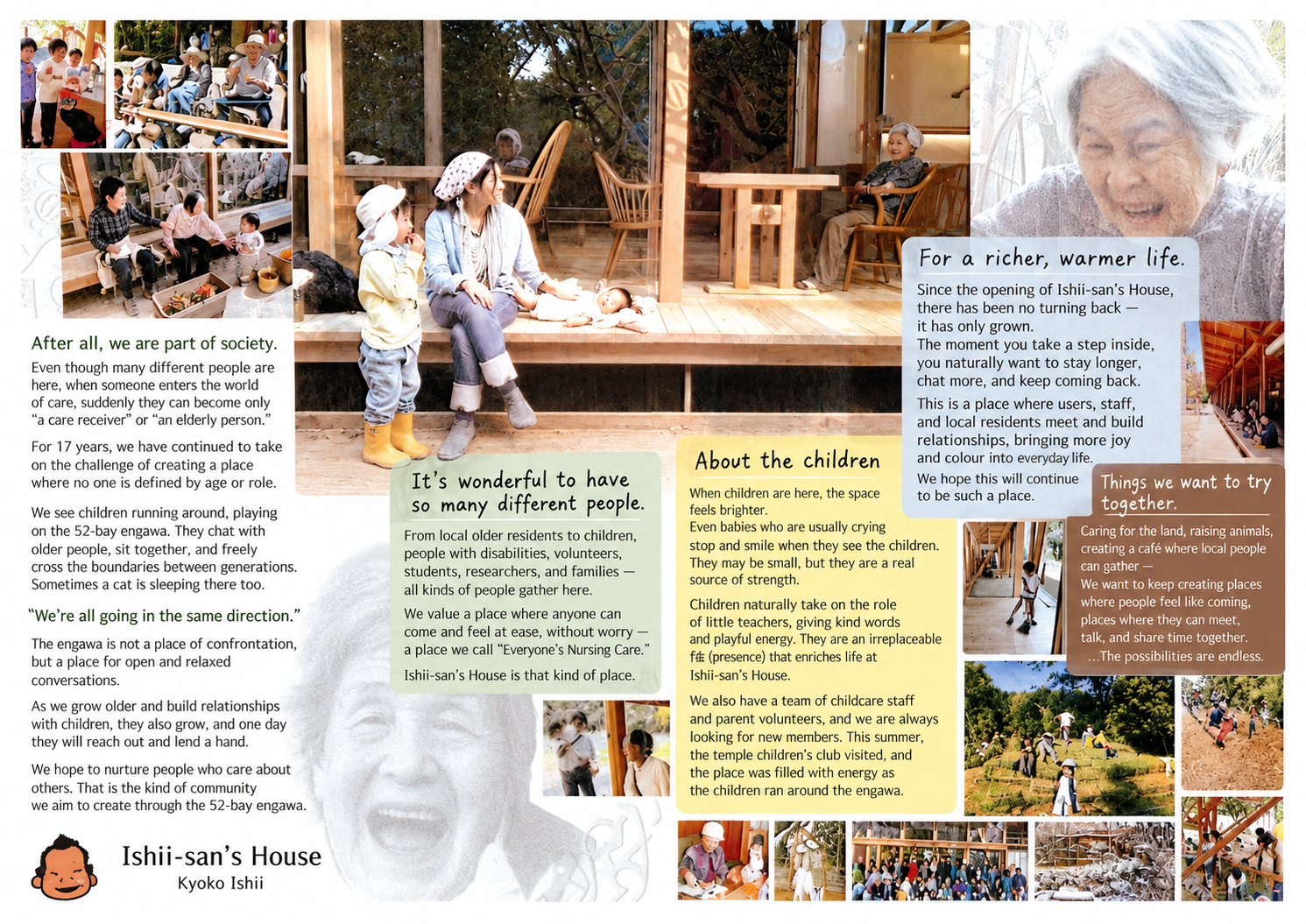
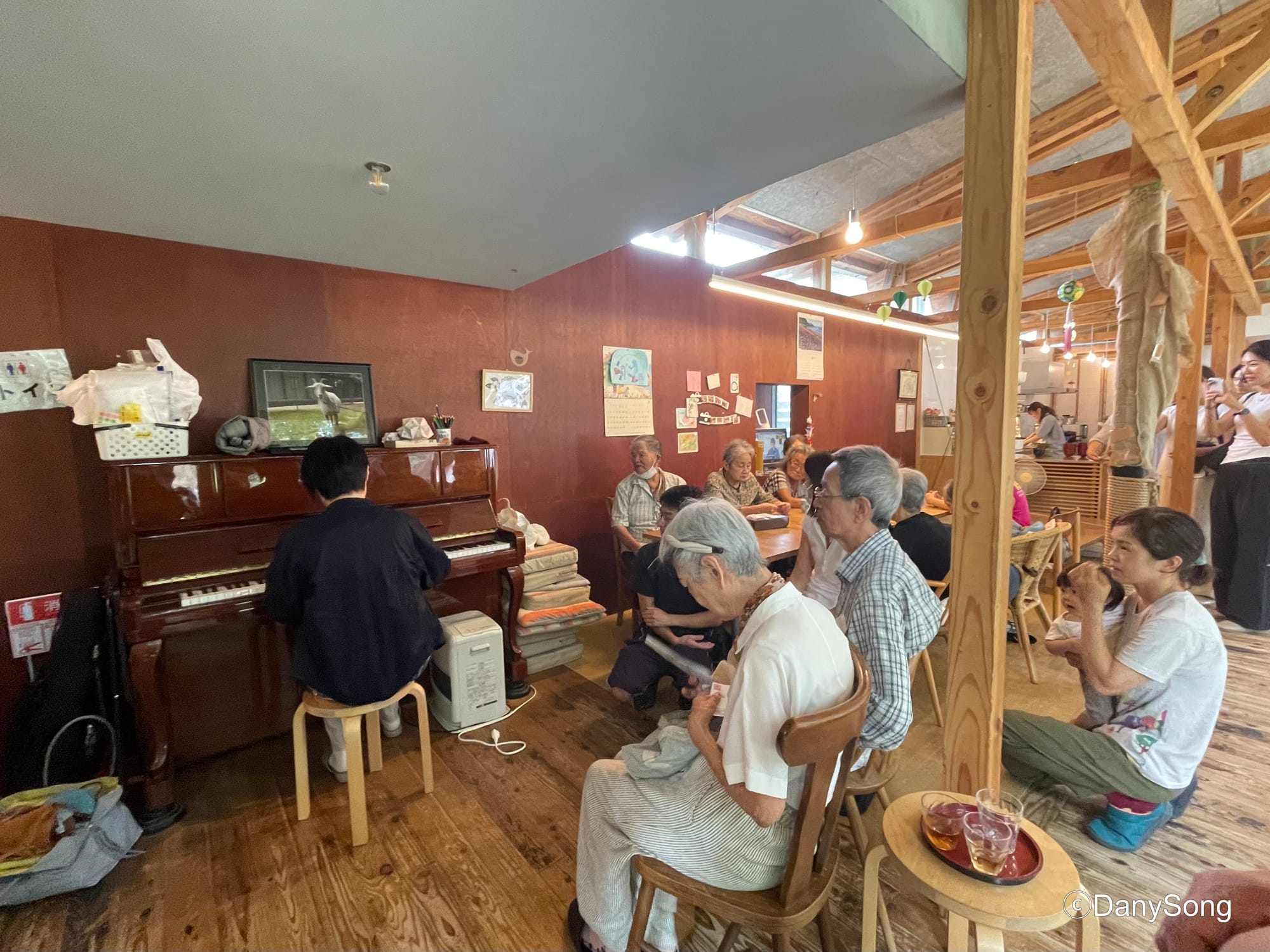
This creates not only connections between generations, but also networks among parents and pet owners. But perhaps there is no need to separate these relationships into specific categories in the first place. What is really being formed here is a sense of connection and belonging among local residents with different life situations.
Although I only spent one or two hours there, the atmosphere between the staff and older people felt very relaxed and comfortable. I had previously visited some of care centres in Korea and interviewed care workers, and I could sense how physically and emotionally demanding their work was when it comes to dealing with the relationships with older adults. But I didn't feel the same tense here. Of course, I cannot fully understand what their daily work is like from such a short visit, but there was a noticeable difference in the atmosphere.
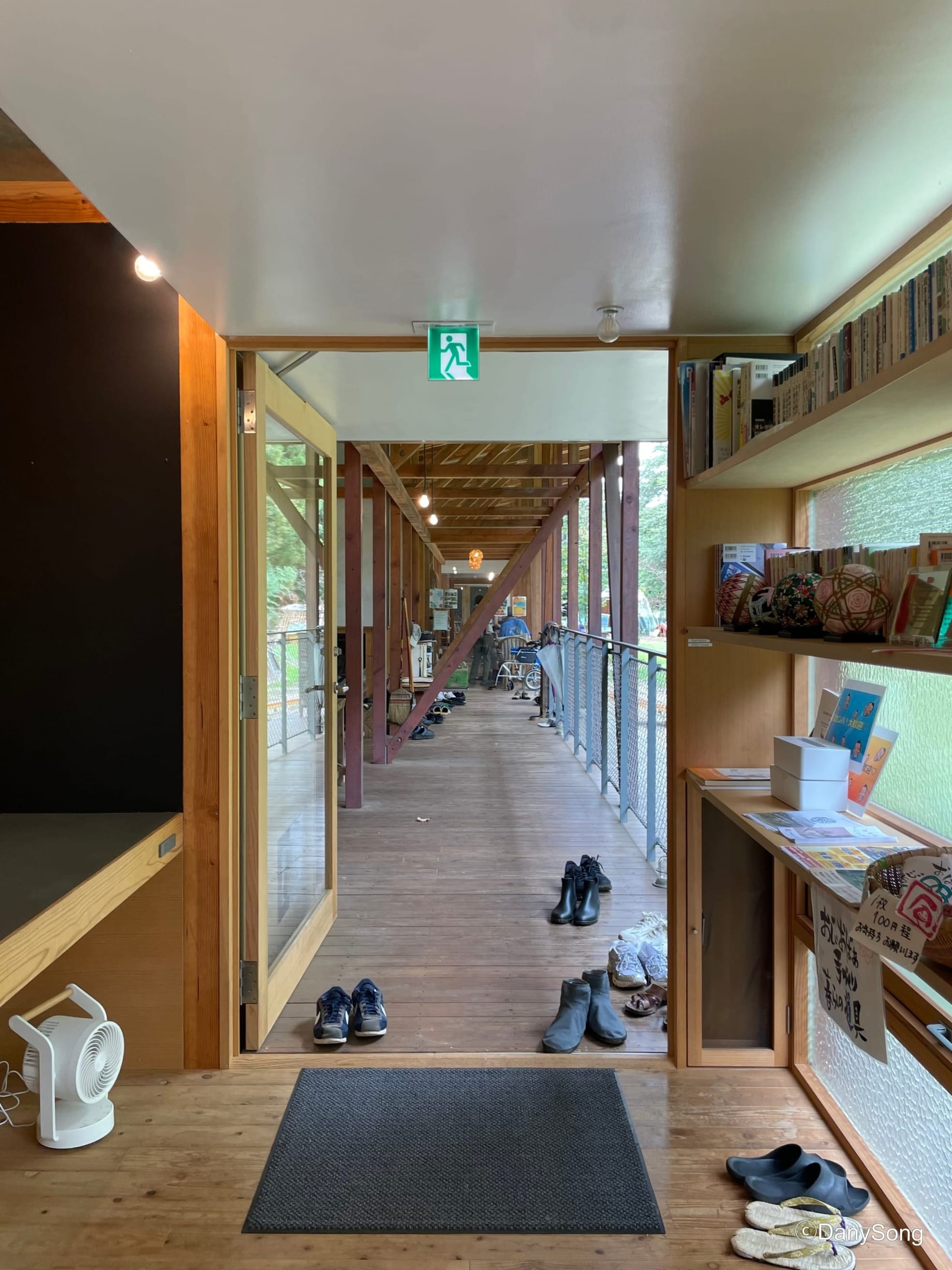
Leaving the day service living area, where the older people spend their time, an open corridor leads to an office used by the staff. Passing through the office, there is a café that opens to local residents, although it was not open at the time of my visit.
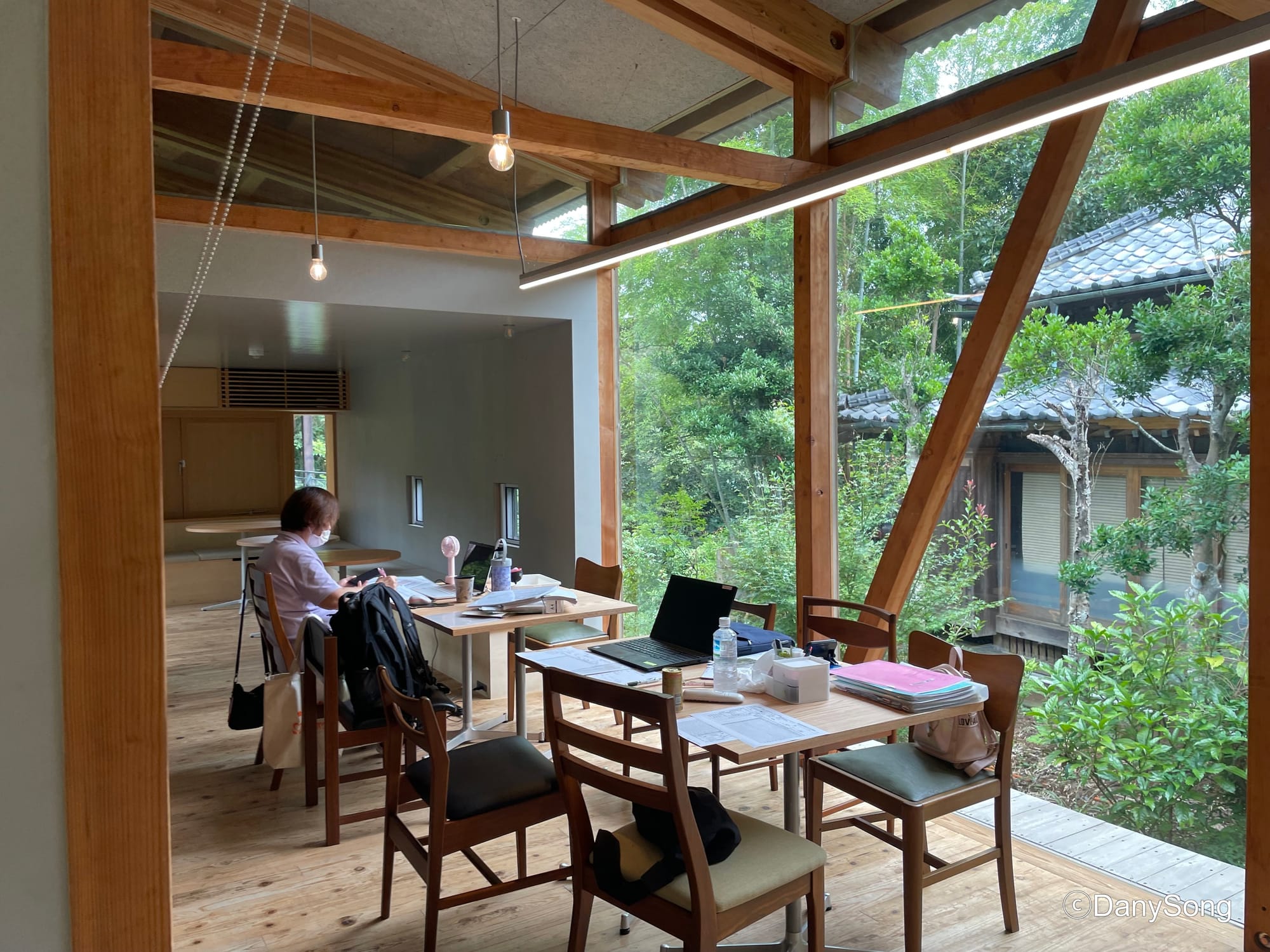
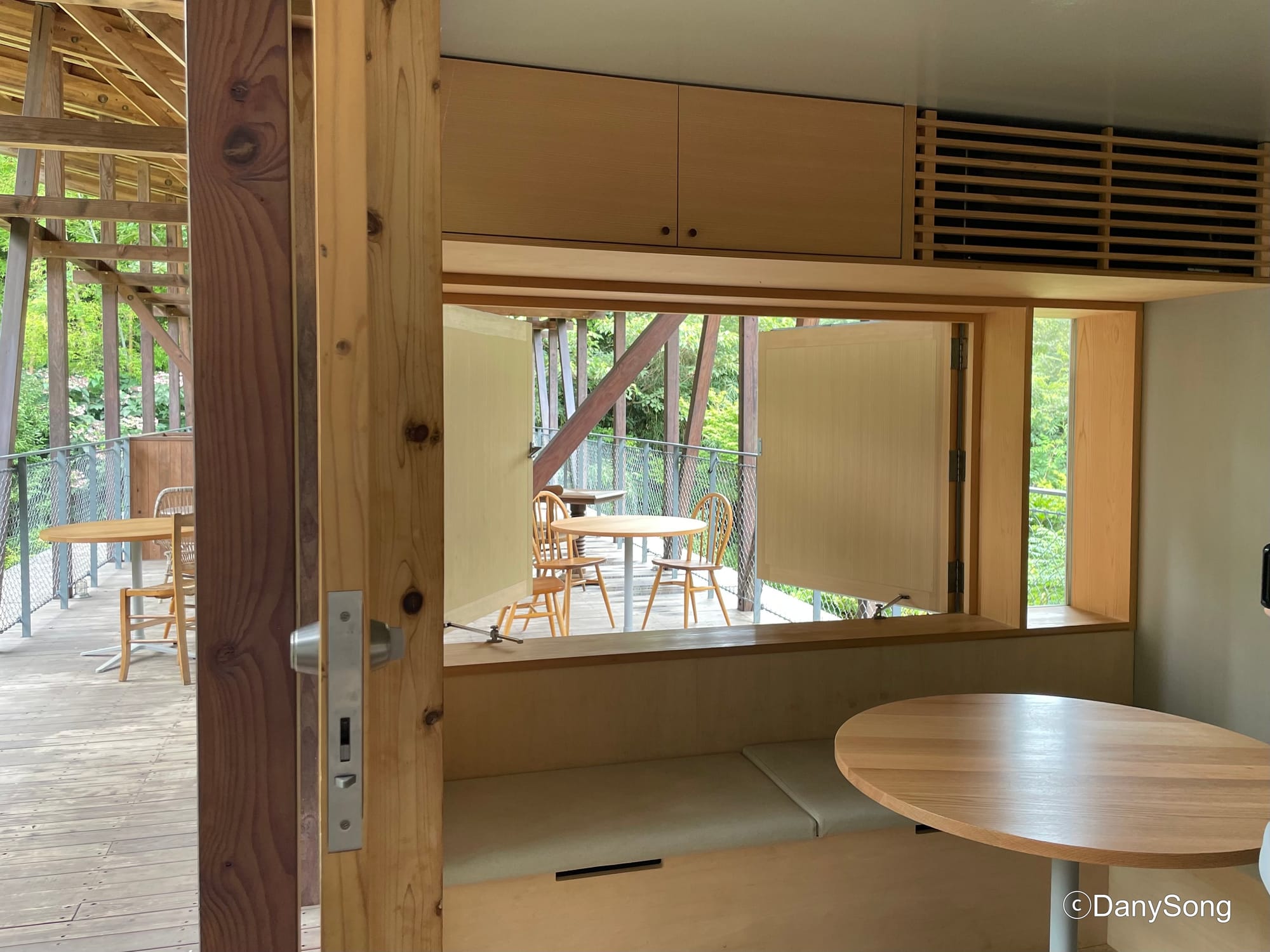
The engawa connects all of these spaces. The spatial layout gradually opens up towards the local community. The café is located closest to the entrance, while the day service area is set further inside. The bathing area is located at the far end, providing more privacy for its users.
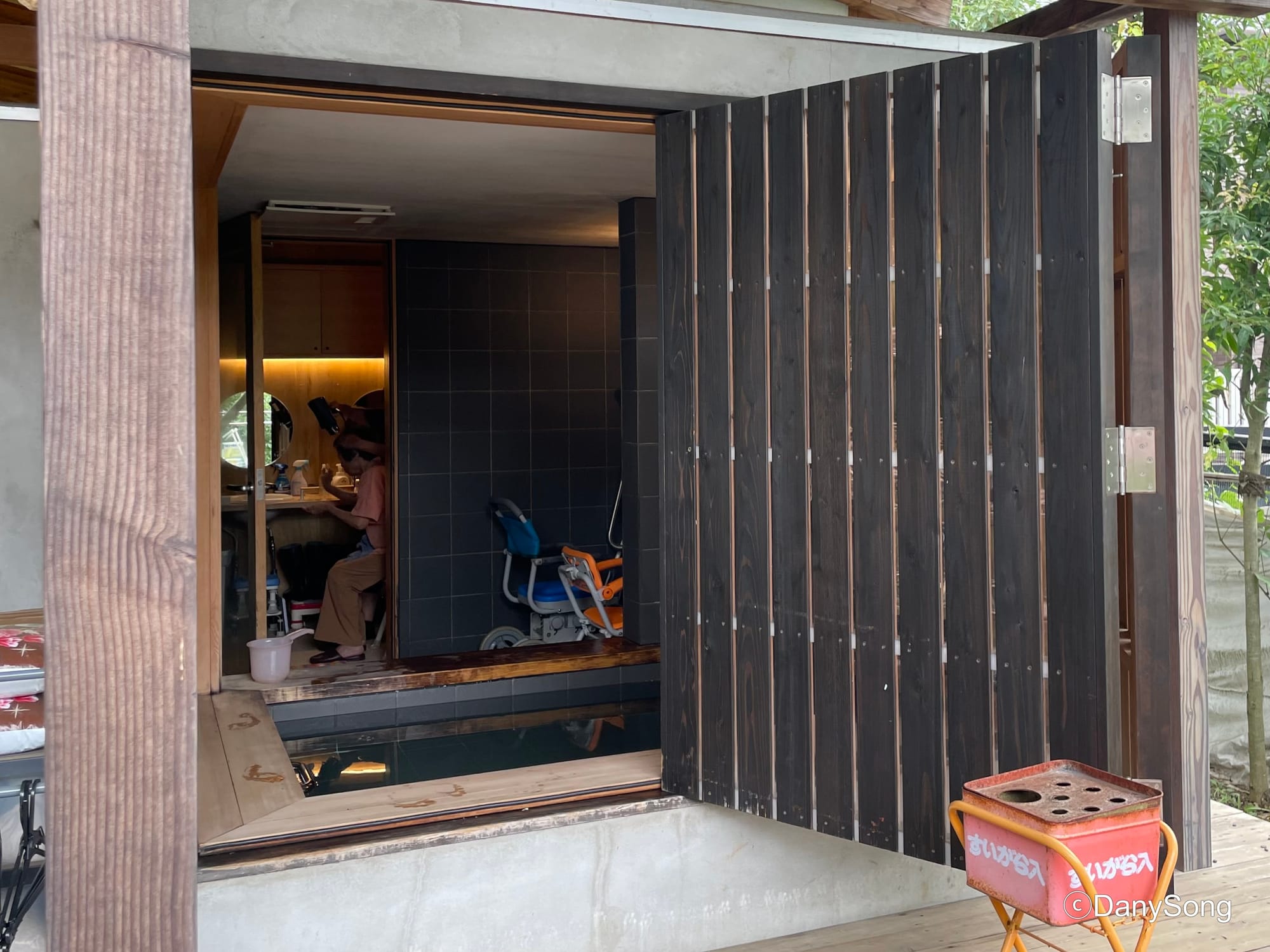
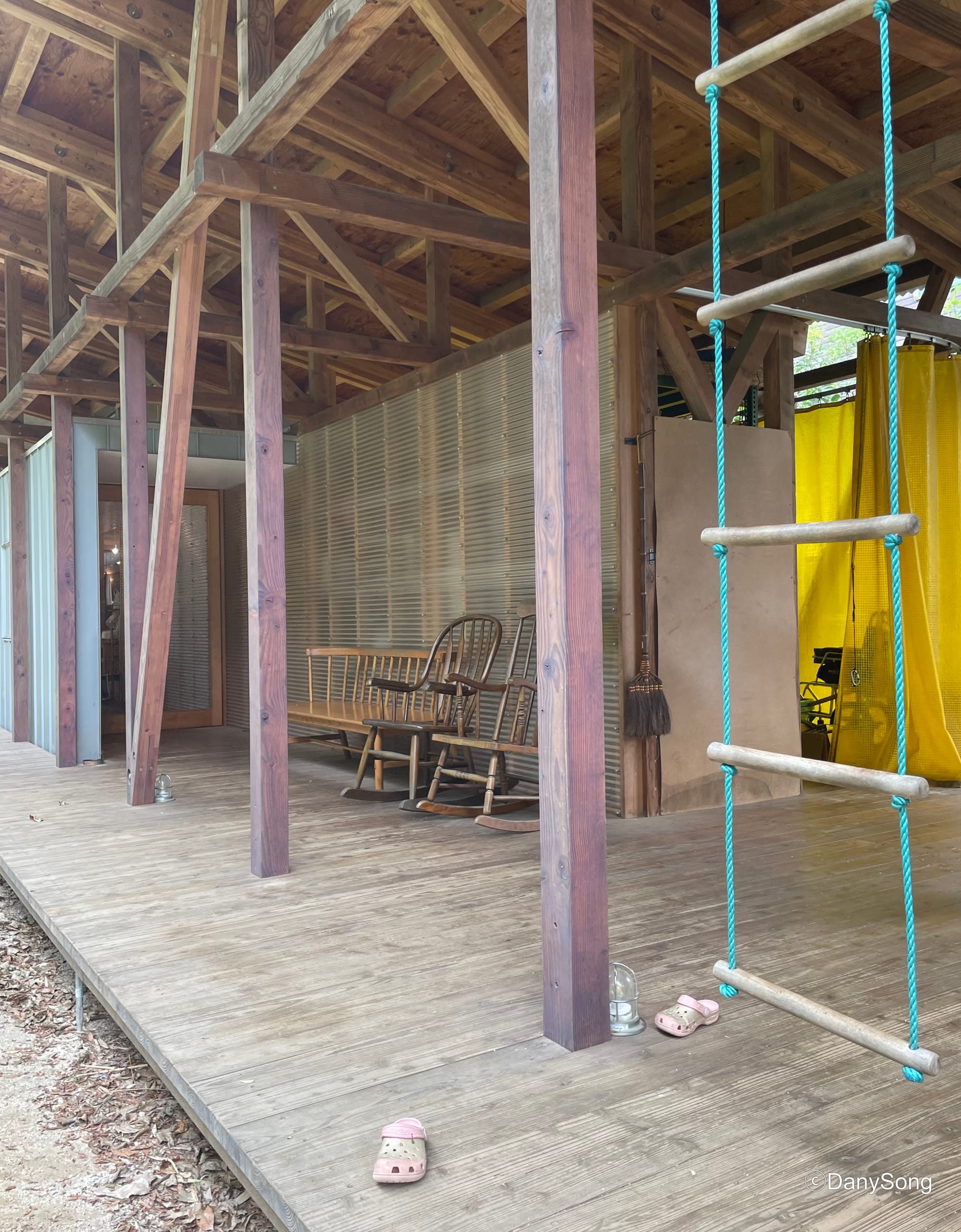
These chairs are placed along the engawa between the day service area and the bathing area. I was told that people sometimes come out here when they want to take a break and spend some time alone, away from the shared living area.
Indeed, communal living needs spaces to retreat to.
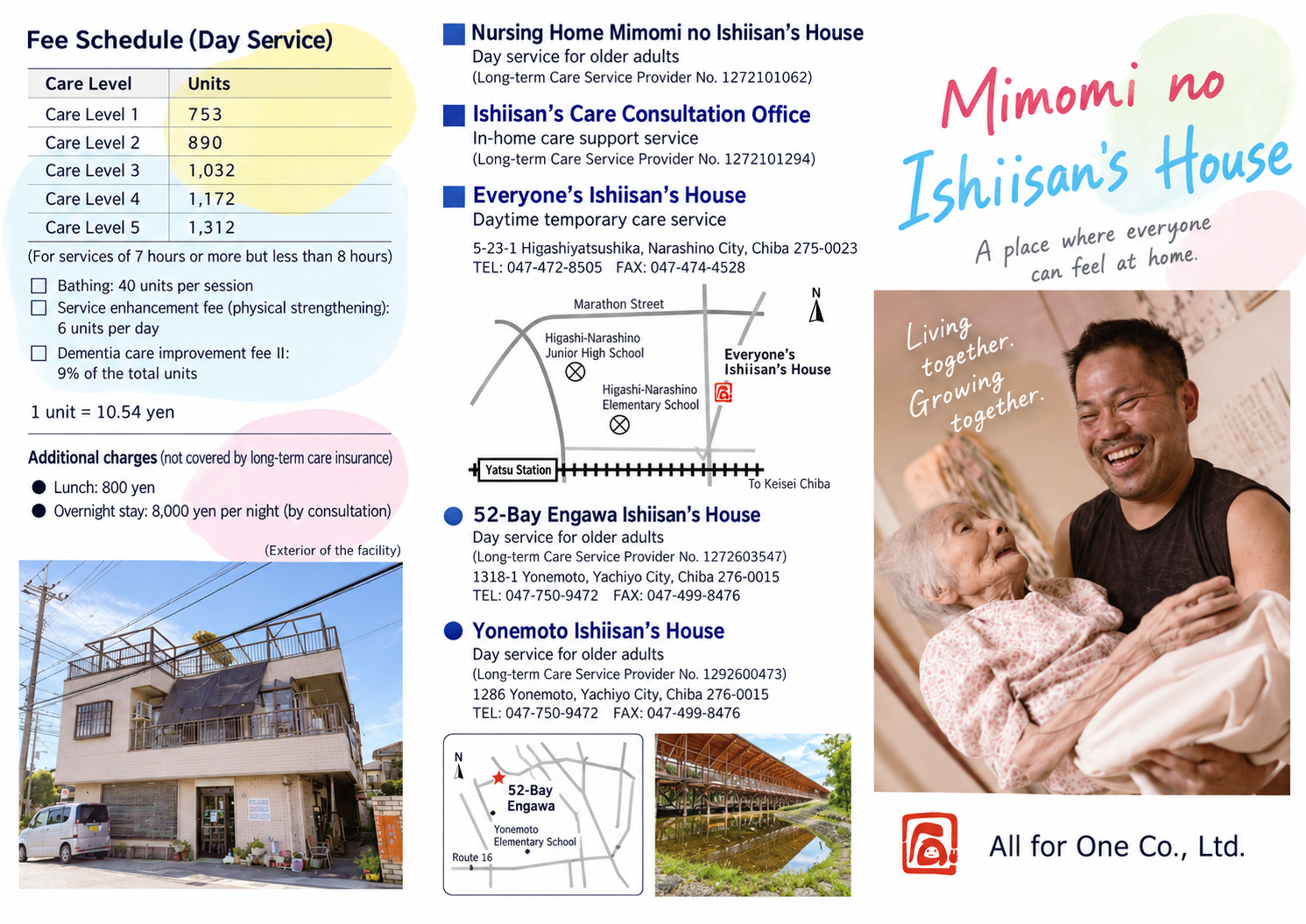
Of course, this is not a free care service for older people.
What impressed me, however, was the way this system sees staff not simply as extra hands, but as neighbours who will grow older together and support one another in the future.
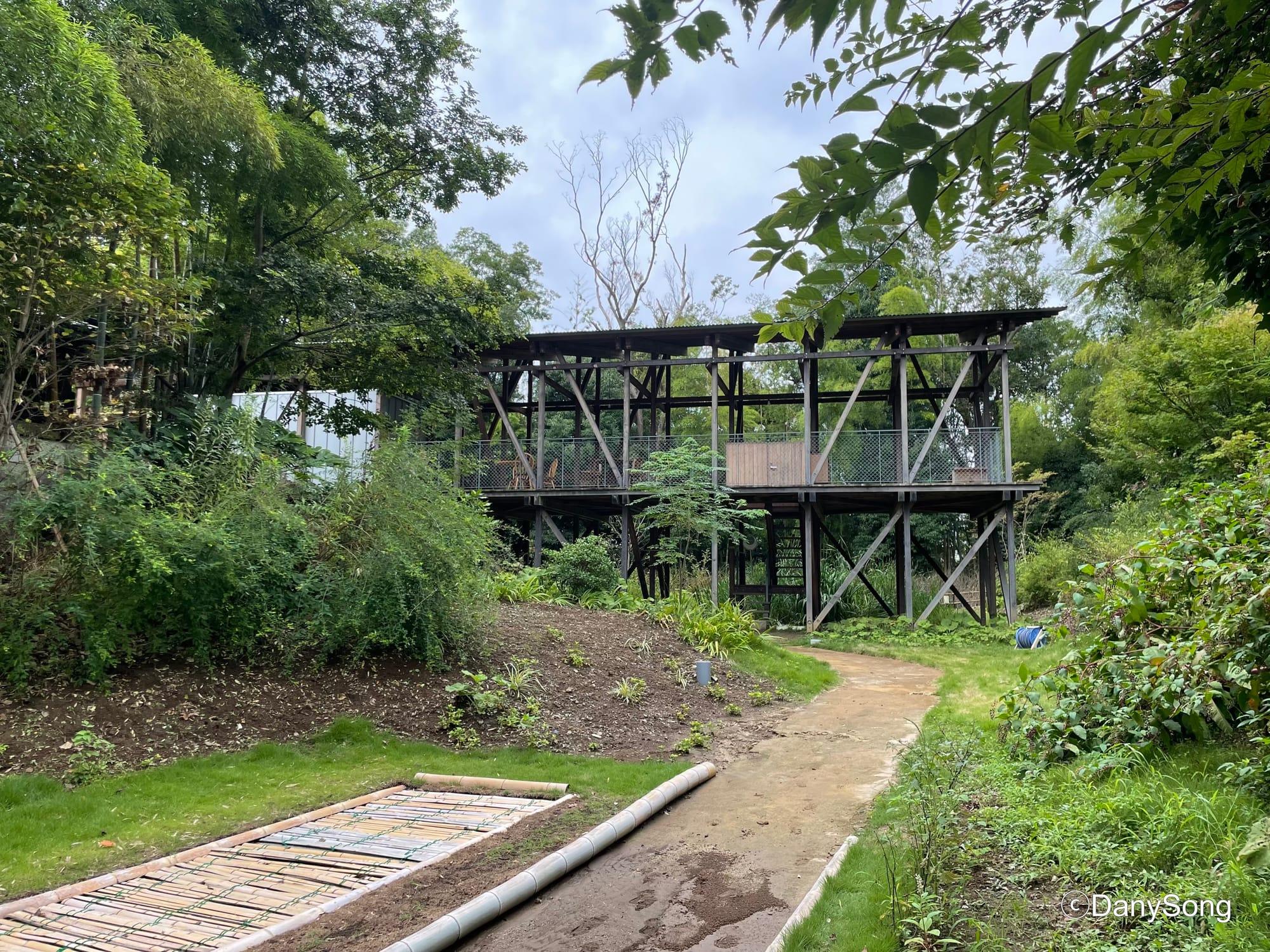
For more information on the architecture and design process, see Yamazaki Kentaro Design Workshop — Long House with an Engawa